
Books ›
1759 · Constantinople
Candide
A gentle boy is thrown into a savage world to test one cheerful idea: that all is for the best.
How this book came to be
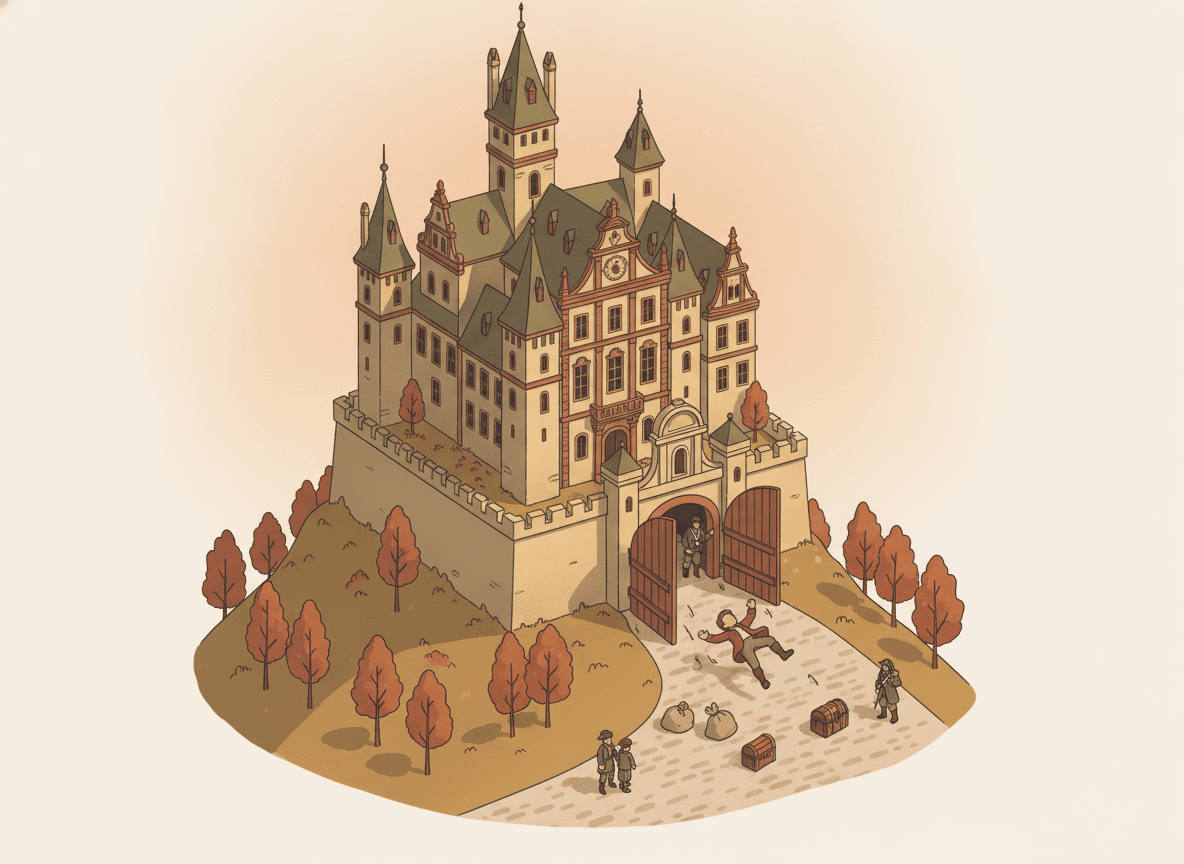
Candide, ou l'Optimisme is a short, fast, savage comic tale. A young man is taught that this is the best of all possible worlds, then travels the earth and is beaten, robbed and shipwrecked while insisting the lesson still holds.
Voltaire wrote it late in life, in his sixties, when he was one of the most famous writers in Europe and one of the most watched. He had been exiled from Paris, had quarrelled with the King of Prussia, and by the late 1750s had settled near Geneva on an estate he called Les Délices. He was rich, ill, and furious about the state of the world.
Two events sharpened that fury. On 1 November 1755 an earthquake destroyed Lisbon and killed tens of thousands of people, many of them in church on All Saints' Day. Then the Seven Years' War broke out in 1756 and turned Europe into a slaughterhouse. Voltaire had already attacked the fashionable idea, associated with the philosopher Leibniz, that everything happens for the best in a world God chose as the finest available. After Lisbon that idea looked obscene to him, so he answered it with a joke that never stops moving.
The book appeared in early 1759, published in several cities at once so nobody could stamp it out. Voltaire denied writing it and attributed it to a fictional German, "Doctor Ralph". The trick fooled nobody. Geneva ordered it burned, Paris authorities seized copies, and the Catholic Church put it on the Index of forbidden books. All of which helped: it sold in the tens of thousands within a year, an enormous figure for the time, in edition after pirated edition.
It never went out of print. Its closing instruction, that we must cultivate our garden, became one of the most quoted lines in French, arguing for useful work over grand theories. Leonard Bernstein turned it into an operetta in 1956, and philosophers still use it as the standard case against easy optimism. Voltaire wrote it, by his own account, very fast. It has outlived almost everything he laboured over.
Continue in the app
Open the app for the illustrated story of this book, the world it was written in, and the full text, a free public-domain edition, to read on screen or hear read aloud.
- ✓ The illustrated story of the book
- ✓ The world it was written in, on the map and timeline
- ✓ The full text, free, read or read aloud
Illustrations are created with AI assistance. Summaries are written with AI and reviewed by the editor. Book metadata comes from Wikidata and Open Library.