
Books ›
431 BC · Corinth
Medea
A wronged woman, a broken vow, and a revenge the gods themselves cannot punish.
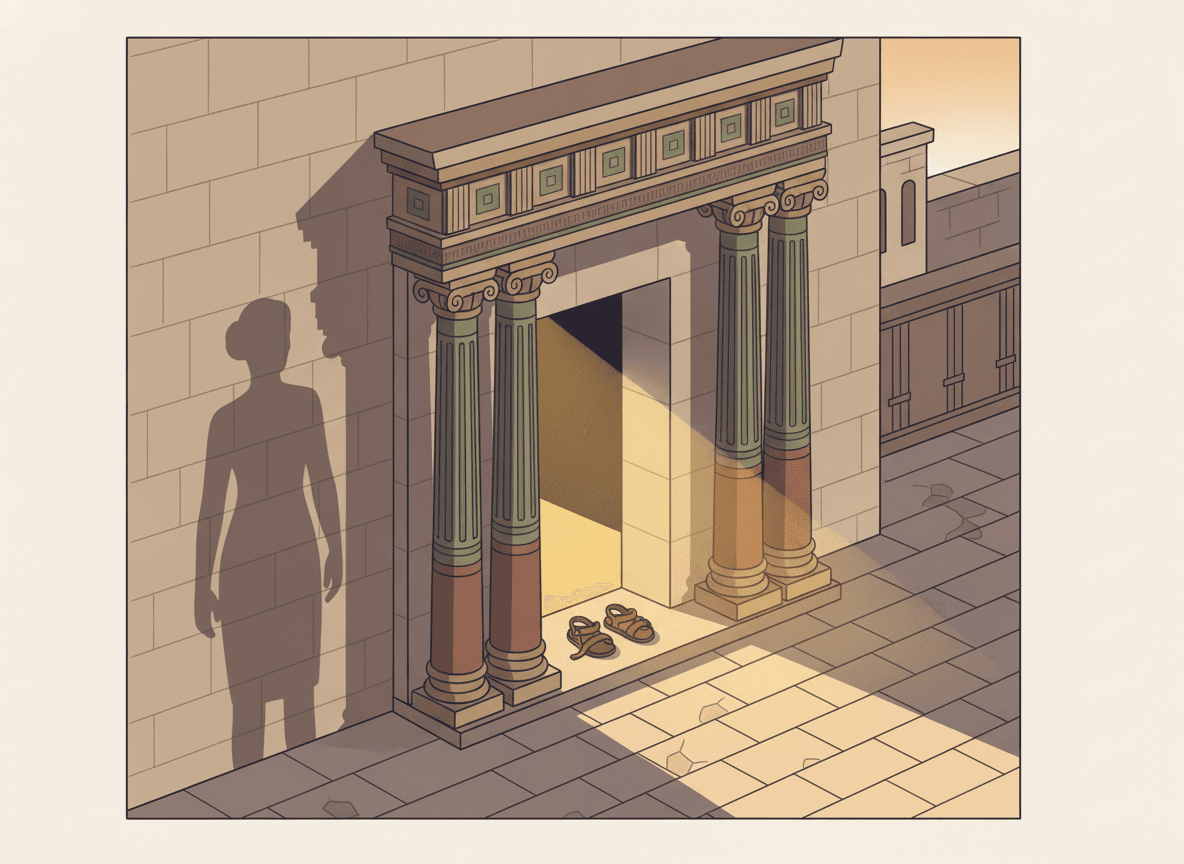
How this book came to be
In 431 BC, Athens was on the edge of war. The long fight with Sparta, later called the Peloponnesian War, began that same year. At the spring festival of Dionysus, the city held its yearly drama competition, and Euripides entered a set of plays that included Medea. He finished last of the three competitors. The judges preferred Sophocles and a now-forgotten poet named Euphorion. The play that lost is the one we still read.
Medea is a tragedy built on an old myth. Medea is a foreign princess and sorceress from Colchis, on the far edge of the Black Sea. She helped the hero Jason win the Golden Fleece, betrayed her own family for him, and followed him to Greece. The play opens after Jason has abandoned her to marry a Corinthian princess. What follows is her answer.
Euripides changed the story. In older versions of the myth, the deaths of Medea's children were blamed on the Corinthians or on accident. Ancient sources suggest that Euripides made Medea herself the killer, and that choice is what shocked audiences and has unsettled readers ever since. He also gave her long speeches of reasoning, so the audience has to sit inside her mind rather than watch a monster from a distance. Athenian women had almost no public voice, which made a stage full of Medea's arguments about the position of women unusually pointed.
Euripides was never the crowd favorite in his lifetime. He won few victories and was mocked by the comic poet Aristophanes for his ragged heroes and his questioning tone. After his death, his reputation climbed. His plays were copied and performed more than those of his rivals, which is a large part of why so many of them survived at all.
Medea has since been staged in nearly every theater tradition on earth. It has been read as a play about exile, about a foreigner treated as disposable, and about a woman who refuses the role written for her. Modern productions have set it in colonial ports, refugee camps and suburban kitchens. The text keeps taking the weight.
Continue in the app
Open the app for the illustrated story of this book, the world it was written in, and the full text, a free public-domain edition, to read on screen or hear read aloud.
- ✓ The illustrated story of the book
- ✓ The world it was written in, on the map and timeline
- ✓ The full text, free, read or read aloud
Illustrations are created with AI assistance. Summaries are written with AI and reviewed by the editor. Book metadata comes from Wikidata and Open Library.