
Books ›
1871 to 1872 · Coventry
Middlemarch
George Eliot's wide, tender map of one small town, and every life tangled inside it
How this book came to be
In 1869, a woman named Mary Ann Evans was living in a London house near Regent's Park, writing under the man's name George Eliot. She used a pen name because she wanted her novels judged on their own terms, and because her private life invited gossip. She lived openly with George Henry Lewes, a writer and critic who could not legally divorce his wife. Polite London society shunned her for it, so she worked mostly among a small circle of friends.
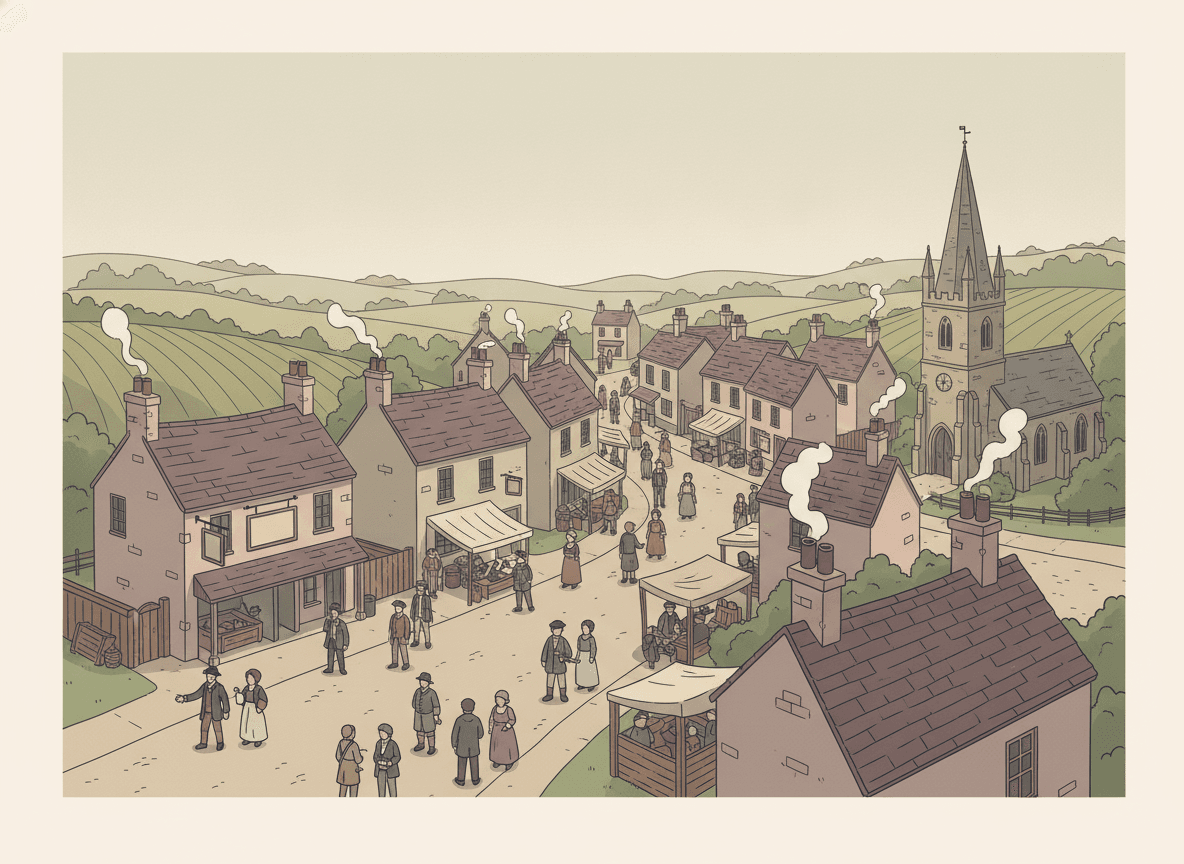
Middlemarch is a novel about ordinary people in a made-up English country town around 1830. Its subtitle says what it is after: a study of provincial life. Eliot follows a young woman who wants her life to mean something and a young doctor who wants to change medicine, and she watches what money, marriage and neighbours do to both.
The book began as two separate things. Eliot had started a story called Miss Brooke, and she also had notes for a novel about a doctor in a provincial town. For months neither would grow. Then grief interrupted everything: Lewes's son Thornie died in her house in 1869 after a long illness, and she barely wrote for months. When she came back to the desk, she made the decision that saved the book. She fused the two stories into one, so that private hopes played out against a whole town.
It was too long for the usual three-volume format, so Lewes proposed publishing it in eight parts, released in instalments from December 1871 to December 1872. Readers had to wait, argue and guess, which built the audience steadily. It sold well and reviewers took it seriously at once.
The book's reputation kept climbing after her death. Virginia Woolf famously called it one of the few English novels written for grown-up people. Later writers borrowed its method: many lives, equally weighted, in one place. Today it is regularly named the finest novel in English, and readers still argue about which character they are.
Continue in the app
Open the app for the illustrated story of this book and the world it was written in. The book itself is not included: it is still in copyright, so read it on Kindle or import your own EPUB into the app's library.
- ✓ The illustrated story of the book
- ✓ The world it was written in, on the map and timeline
- ✕ The full text is not included (in copyright)
Illustrations are created with AI assistance. Summaries are written with AI and reviewed by the editor. Book metadata comes from Wikidata and Open Library.