
Books ›
9th century · Baghdad
One Thousand and One Nights
Scheherazade's nightly gamble, and the stories that kept death waiting
How this book came to be
One Thousand and One Nights is not one book by one hand. It is a collection of stories in Arabic, held together by a frame: Shahrazad, a vizier's daughter, marries a king who kills each new wife at dawn, and she stays alive by telling him a story every night and stopping before the ending.
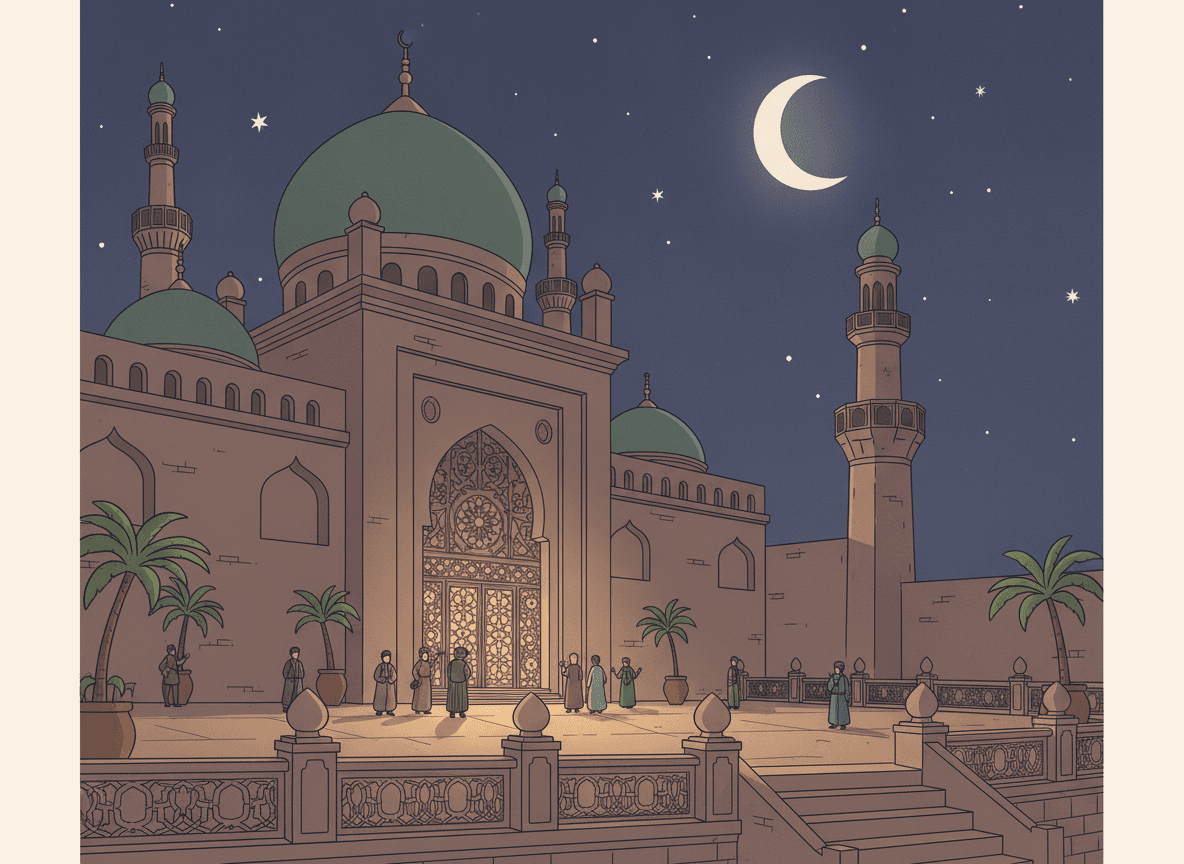
The collection grew over centuries rather than being written in one sitting. Its oldest core came from a Persian book called Hazar Afsan, "A Thousand Tales", itself carrying material that reached back to India. Around the ninth century, Baghdad was the place where that core was translated and reworked into Arabic. The city was then the capital of the Abbasid caliphs and a hub of paper-making, bookshops and translation, so foreign stories arrived, got copied and were changed to suit local taste. A tenth-century Baghdad bookseller, Ibn al-Nadim, mentions the Persian book and its thousand-night frame in his catalogue of books, which is our earliest firm evidence. A scrap of paper from around the ninth century survives with the title and the opening words, so the thing existed early even if no full old copy does.
After Baghdad, the stories kept traveling. Storytellers in Cairo, Damascus and elsewhere added tales, dropped others and gave the collection its later shape. Because of that, no single authoritative text exists. The version most Arabic readers know was printed in Egypt in the nineteenth century.
Europe met the book through Antoine Galland, a French scholar who published his translation from 1704. It was a sensation, and it changed European taste for the exotic and the fantastic. Galland also included stories, among them Aladdin and Ali Baba, that appear in no known Arabic manuscript before him. He said he heard them from a Syrian traveler named Hanna Diyab, and Diyab's own memoir, found much later, supports that. So the tales the West knows best entered the collection last.
Since then the Nights has fed opera, film, poetry and the whole idea of a story inside a story. Writers keep returning to Shahrazad because she makes a plain bargain visible: keep the listener curious, and you get to see morning.
Continue in the app
Open the app for the illustrated story of this book, the world it was written in, and the full text, a free public-domain edition, to read on screen or hear read aloud.
- ✓ The illustrated story of the book
- ✓ The world it was written in, on the map and timeline
- ✓ The full text, free, read or read aloud
Illustrations are created with AI assistance. Summaries are written with AI and reviewed by the editor. Book metadata comes from Wikidata and Open Library.