
Books ›
1677 · Troezen
Phèdre
One day, one palace, and a love no one is allowed to speak.
How this book came to be
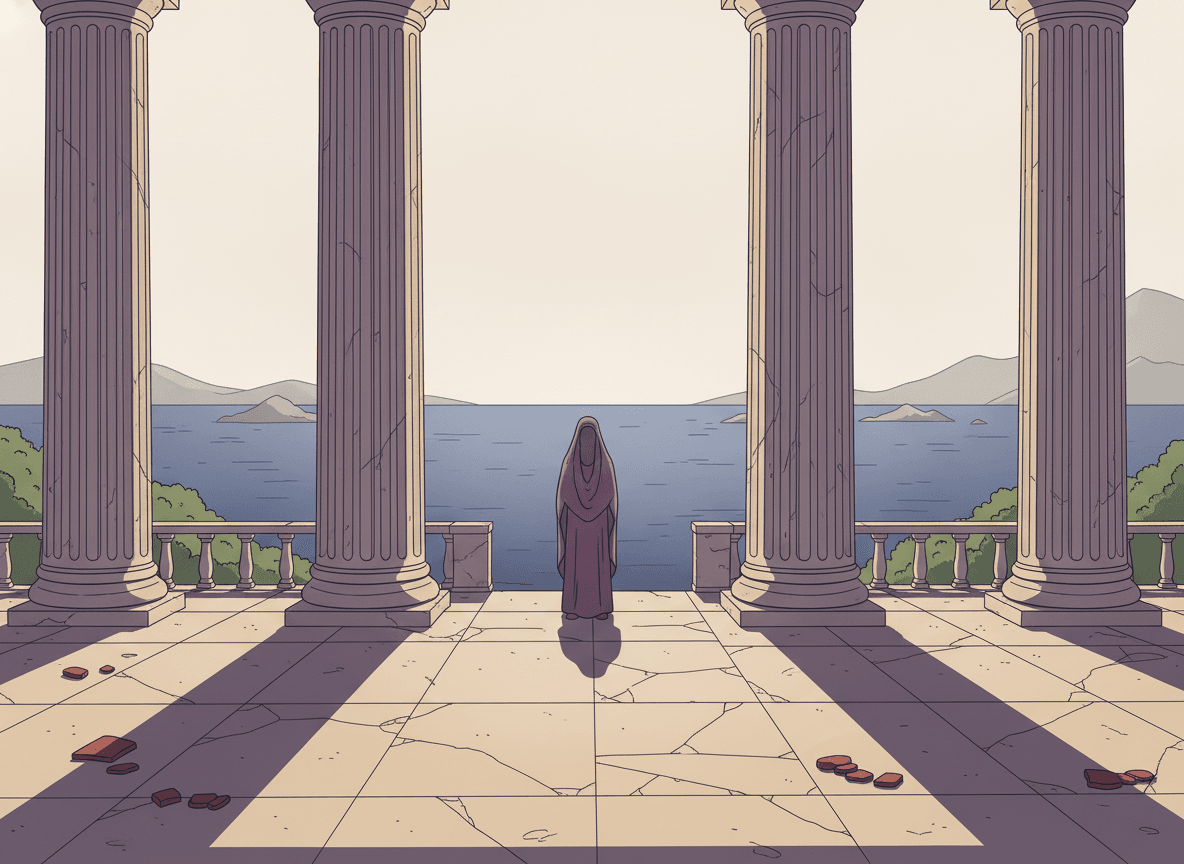
Phèdre is a five-act tragedy in verse, first performed on 1 January 1677 at the Hôtel de Bourgogne in Paris. Its subject is a queen consumed by a love she believes is a curse, and the ruin that follows when she speaks it aloud.
By then Jean Racine was in his late thirties and at the top of his trade. Born in La Ferté-Milon, orphaned young, he had been raised and educated by the nuns and scholars of Port-Royal, a strict Jansenist community that taught him Greek and taught him that human beings cannot save themselves. He then walked away from that world for the theatre, which Port-Royal considered a school of sin. The tension never really left him, and you can hear it in this play.
He did not invent the story. He reworked Euripides, the Athenian playwright of the fifth century BC, and the Roman Seneca, both of whom had dramatized the same household disaster. What Racine added was the pressure of his own century: a tightly ruled court, a language of severe formal beauty, and twelve-syllable alexandrine lines that hold enormous feeling inside strict rules.
The premiere turned into one of the ugliest literary fights of the age. A rival play on the same subject, by Jacques Pradon, opened two days later. Backers hostile to Racine, connected to aristocratic circles at court, are said to have bought up seats at both theatres to empty his house and fill Pradon's. For a few weeks it worked. Then it did not, because audiences and readers kept coming back to Racine's version and Pradon's faded.
Racine's response was to stop. He wrote nothing more for the public stage, married, and took the salaried post of royal historiographer to Louis XIV alongside his friend Boileau. Only much later did he write again, and then only religious plays for a girls' school at Saint-Cyr.
The play he left behind became the central text of French tragedy. It is what French students read, what actresses measure themselves against, and what later writers from the Romantics to modern critics returned to when they wanted to argue about desire, guilt and fate. The title role remains one of the hardest and most coveted in the language.
Continue in the app
Open the app for the illustrated story of this book and the world it was written in. The book itself is not included: it is still in copyright, so read it on Kindle or import your own EPUB into the app's library.
- ✓ The illustrated story of the book
- ✓ The world it was written in, on the map and timeline
- ✕ The full text is not included (in copyright)
Illustrations are created with AI assistance. Summaries are written with AI and reviewed by the editor. Book metadata comes from Wikidata and Open Library.