
Books ›
1813 · Hertfordshire
Pride and Prejudice
Jane Austen's sparkling duel of wits, hearts, and first impressions
How this book came to be
Jane Austen was about twenty-one when she first drafted this book, in the 1790s, at the rectory in Steventon, a village in Hampshire, England. She called it First Impressions. Her father, a country clergyman, liked it enough to offer it to a London publisher in 1797. The publisher refused it without even reading it.
So the manuscript waited. Austen's life in those years was not the life of a professional writer. Women of her class were not expected to earn money, and her family moved to Bath, then to Southampton, unsettled after her father died in 1805. Writing seems to have stalled. Only after her brother Edward gave the family a cottage at Chawton in 1809 did she return to her old drafts with real energy. She revised First Impressions heavily and renamed it Pride and Prejudice.
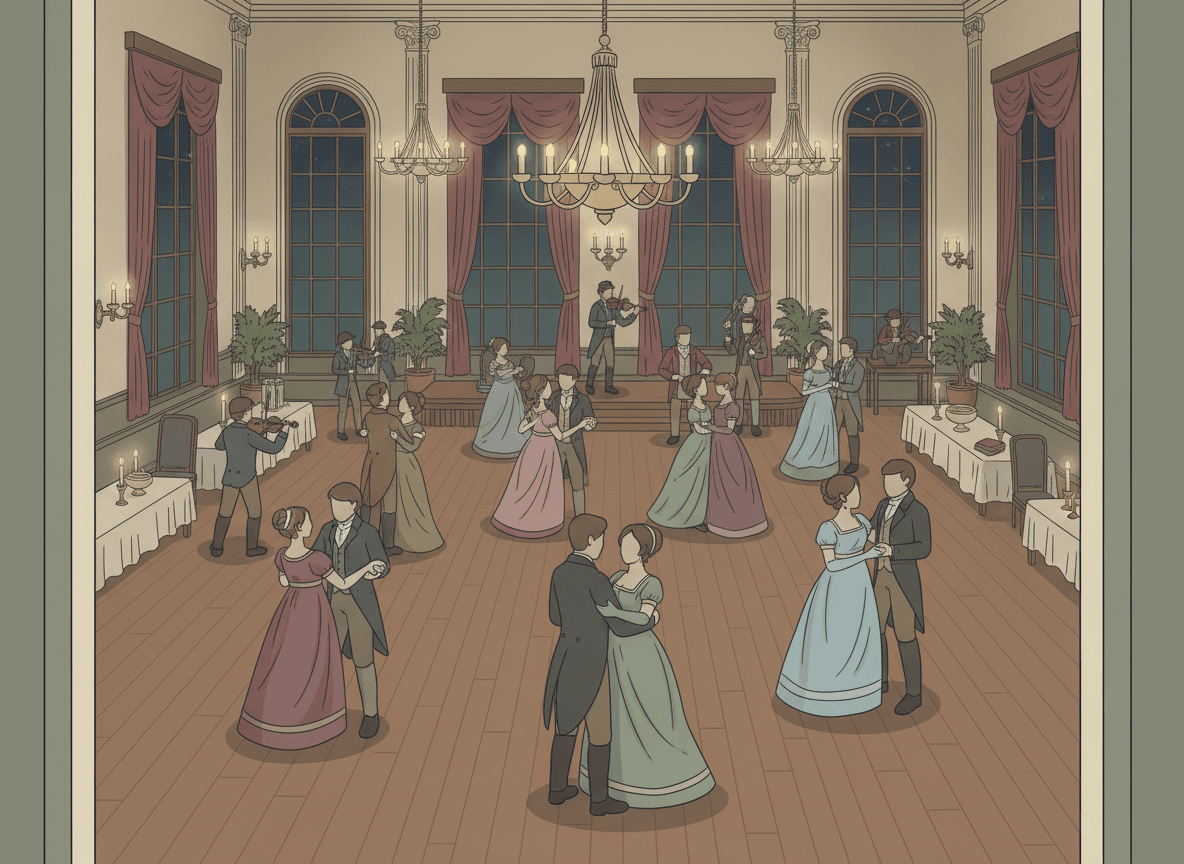
It appeared in January 1813, published by Thomas Egerton. Like her earlier Sense and Sensibility, it came out anonymously, credited only to "the Author of Sense and Sensibility." That was normal for a respectable woman, and it meant Austen watched her own success from behind a curtain. The book is a comic novel about Elizabeth Bennet, a sharp-tongued young woman with little money, and Mr Darcy, a rich landowner who insults her at a dance. The plot turns on marriage, because in her world a woman without a fortune had almost no other way to secure a future.
Readers loved it fast. The first edition sold out, a second followed within the year, and Austen called it in a letter to her sister Cassandra "my own darling Child." She sold the copyright outright for 110 pounds, which meant Egerton, not she, collected the profits when it kept selling.
She died in 1817, aged forty-one, still unnamed in print. Her brother Henry revealed her authorship after her death. Since then the novel has never gone out of print. It has been filmed, televised, rewritten with zombies, and reworked into Bridget Jones's Diary, and its opening line about a single man in possession of a good fortune is among the most quoted sentences in English.
Continue in the app
Open the app for the illustrated story of this book, the world it was written in, and the full text, a free public-domain edition, to read on screen or hear read aloud.
- ✓ The illustrated story of the book
- ✓ The world it was written in, on the map and timeline
- ✓ The full text, free, read or read aloud
Illustrations are created with AI assistance. Summaries are written with AI and reviewed by the editor. Book metadata comes from Wikidata and Open Library.