
Books ›
1664 to 1669 · former 11th arrondissement of Paris
Tartuffe
Molière's banned comedy about the holiest fraud in Paris, and the family that fights back
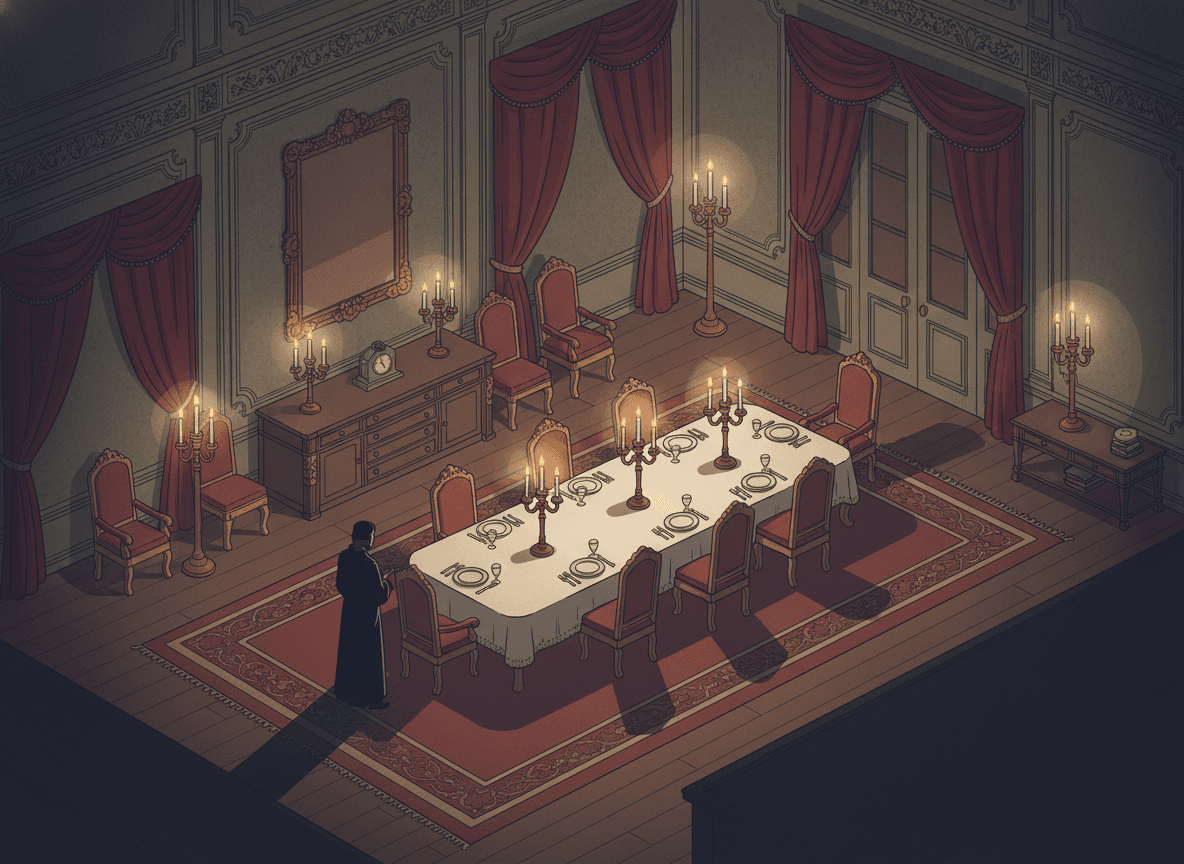
How this book came to be
Molière was born Jean-Baptiste Poquelin, the son of a Paris upholsterer, and he gave up that comfortable trade to act. By 1664 he ran the most talked-about theatre troupe in France, under the personal protection of the young king Louis XIV. That protection was about to be tested.
Tartuffe is a comedy in verse, five acts of rhyming alexandrines. A wealthy Paris householder, Orgon, takes a smooth-talking holy man into his home and hands over his family, his daughter and eventually his fortune, because he is certain the man is a saint. Everyone else can see the fraud. That is the whole engine of the play, and it was dangerous, because in the 1660s religious devotion was also a political faction.
The first version, three acts, was played in May 1664 at Versailles during the king's lavish garden festival, the Plaisirs de l'Île enchantée. The reaction was immediate. A powerful devout society, the Compagnie du Saint-Sacrement, moved against it. The king enjoyed the play but could not afford the fight, so public performance was forbidden.
Molière did not drop it. He rewrote, softened, renamed his hypocrite Panulphe, and staged the new version on 5 August 1667 while Louis was away at war. It was shut down the next day by the president of the Paris parlement, and days later the archbishop of Paris, Hardouin de Péréfixe, threatened excommunication for anyone who performed, read or even watched it. Molière sent petitions to the king and kept the play alive by reading it aloud in private houses.
The ban finally lifted on 5 February 1669. Audiences packed the Palais-Royal, and Tartuffe became the biggest box-office success of Molière's life. He died four years later, collapsing after performing in another of his own plays.
The afterlife is unusual: the character escaped the play. In French, un tartuffe means a religious hypocrite, and the word crossed into English the same way. The play is still one of the most performed works in the repertoire of the Comédie-Française, the company formed from Molière's troupe after his death.
Continue in the app
Open the app for the illustrated story of this book, the world it was written in, and the full text, a free public-domain edition, to read on screen or hear read aloud.
- ✓ The illustrated story of the book
- ✓ The world it was written in, on the map and timeline
- ✓ The full text, free, read or read aloud
Illustrations are created with AI assistance. Summaries are written with AI and reviewed by the editor. Book metadata comes from Wikidata and Open Library.