
Books ›
1904 · Kharkiv
The Cherry Orchard
A family comes home to save the house, and spends the spring remembering instead.
How this book came to be
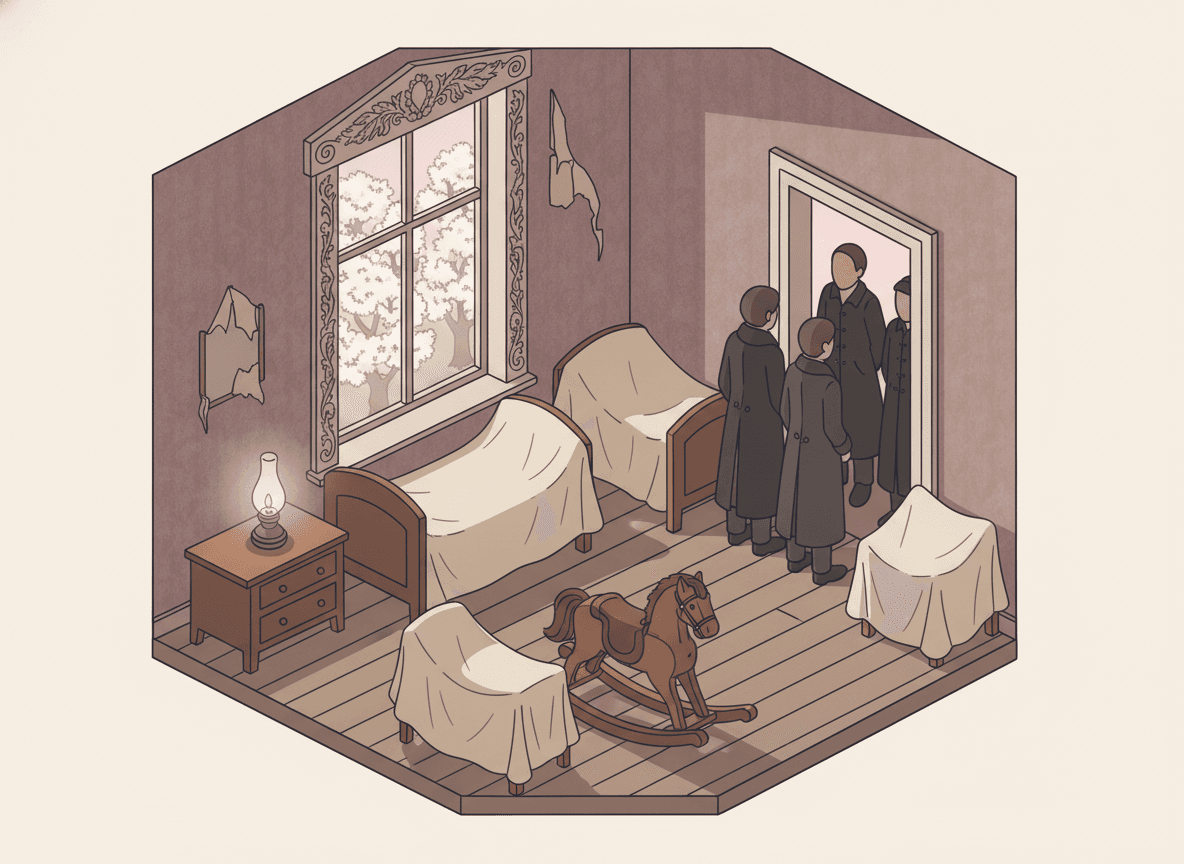
By 1903, Anton Chekhov was a famous writer with failing lungs. Tuberculosis had pushed him out of Moscow and down to Yalta, a warm town on the Black Sea coast, where doctors told him to rest. He hated it. His wife, the actress Olga Knipper, worked in Moscow, so their marriage ran largely on letters. In that half-exile he wrote his last play, The Cherry Orchard: a story about a landowning family who cannot pay their debts and lose their estate, including the beautiful orchard the whole household loves, to a businessman whose father had been a serf on that same land.
That detail was the point. Russia had freed its serfs in 1861, which meant that within one lifetime the children of the enslaved could buy out the families who had owned them. Chekhov knew the story from inside: his own grandfather had been a serf who purchased his freedom, and his father's shop had gone bankrupt when Chekhov was a boy, costing the family their house. He was writing about a world sliding out from under people, because he had watched it happen.
He worked slowly, sometimes only a few lines a day, coughing between them. He sent the finished play to the Moscow Art Theatre, and then came the famous quarrel. Chekhov insisted he had written a comedy, close to a farce. The director, Konstantin Stanislavski, read it as a tragedy and staged it that way, with tears and long pauses. Chekhov was annoyed for the rest of his short life.
The premiere was on 17 January 1904, his name day. The theatre dragged the sick author onstage for a tribute he found excruciating. Six months later he was dead, at forty-four, in a German spa town.
The play outlived the argument. Its method, in which almost nothing dramatic happens onstage while everything changes underneath, reshaped modern theatre from Broadway to Tokyo. Directors still fight over whether to play it for laughs or for grief. Chekhov left both doors open on purpose.
Continue in the app
Open the app for the illustrated story of this book and the world it was written in. The book itself is not included: it is still in copyright, so read it on Kindle or import your own EPUB into the app's library.
- ✓ The illustrated story of the book
- ✓ The world it was written in, on the map and timeline
- ✕ The full text is not included (in copyright)
Illustrations are created with AI assistance. Summaries are written with AI and reviewed by the editor. Book metadata comes from Wikidata and Open Library.