
Books ›
1925 · Long Island
The Great Gatsby
F. Scott Fitzgerald's shimmering Jazz Age tragedy of longing, money, and the green light across the bay
How this book came to be
F. Scott Fitzgerald wrote The Great Gatsby in a hurry to prove something. In 1924 he was 27, famous, and broke. He had made his name at 23 with This Side of Paradise, then spent the money as fast as the magazines paid it. He told his editor, Maxwell Perkins, that he wanted to write something new and beautiful and patterned, not another pile of quick stories.
So he moved. He and his wife, Zelda Fitzgerald, sailed for France in the spring of 1924 and settled on the Riviera, where living was cheap and the distractions were supposed to be fewer. They weren't. That summer Zelda became involved with a French aviator, Edouard Jozan, and the crisis left a mark on the marriage and on the book's mood of longing and betrayal. Fitzgerald drafted through the summer and kept rewriting in Rome that winter.
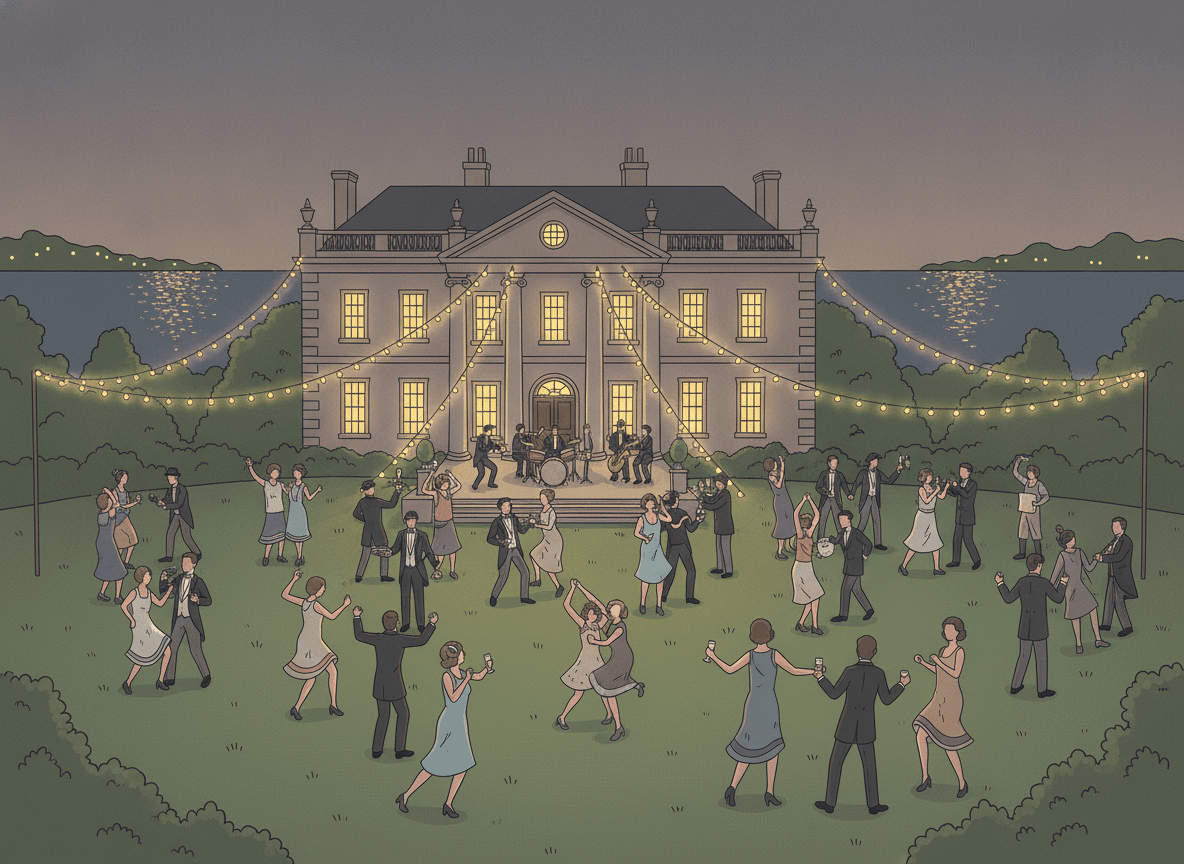
The novel is short, barely 50,000 words. A narrator named Nick Carraway watches his rich, mysterious neighbour Jay Gatsby throw enormous parties on Long Island for one private reason. Fitzgerald drew the setting from the North Shore of Long Island, where he had lived in Great Neck, and from the boom years after the First World War, when new money, jazz and Prohibition bootlegging were remaking American life.
He fought over the title until the last minute, floating Trimalchio in West Egg and Under the Red, White and Blue. Published in April 1925, it sold about 20,000 copies, a disappointment against his earlier hits. Reviews were mixed. Fitzgerald died in 1940 believing he had been forgotten, with unsold copies still sitting in the publisher's warehouse.
The recovery came later. During the Second World War the Armed Services Editions shipped about 150,000 free copies to American soldiers, which put the book in more hands than it had reached in its author's lifetime. Critics reassessed it in the 1950s, schools adopted it, and it became one of the most taught novels in the United States. Its green light at the end of a dock turned into shorthand for wanting something you cannot have, and the phrase "Jazz Age", which Fitzgerald himself popularised, still carries the picture he drew of it.
Continue in the app
Open the app for the illustrated story of this book, the world it was written in, and the full text, a free public-domain edition, to read on screen or hear read aloud.
- ✓ The illustrated story of the book
- ✓ The world it was written in, on the map and timeline
- ✓ The full text, free, read or read aloud
Illustrations are created with AI assistance. Summaries are written with AI and reviewed by the editor. Book metadata comes from Wikidata and Open Library.