
Books ›
1915 · Prague
The Metamorphosis
Franz Kafka's quiet nightmare of a man who wakes up changed, and a family that changes more
How this book came to be
In late 1912, Franz Kafka was a twenty-nine-year-old lawyer at a workers' accident insurance institute in Prague, then a German-speaking corner of Austria-Hungary. He wrote at night, because his days belonged to the office and his evenings to a family that expected him at the table. He also helped run his brother-in-law's asbestos factory, a duty he resented and that left him exhausted.
He began Die Verwandlung (The Metamorphosis) in November 1912, in bed, feeling ill. It is a short novel about a traveling salesman, Gregor Samsa, who wakes one morning changed into an enormous insect, and about what his family does next. Kafka wrote it in roughly three weeks, complaining in letters to Felice Bauer, the woman he was then courting by post, that the interruptions of the office were ruining it. He was unhappy with the ending, which he felt he had botched because a business trip broke his rhythm.
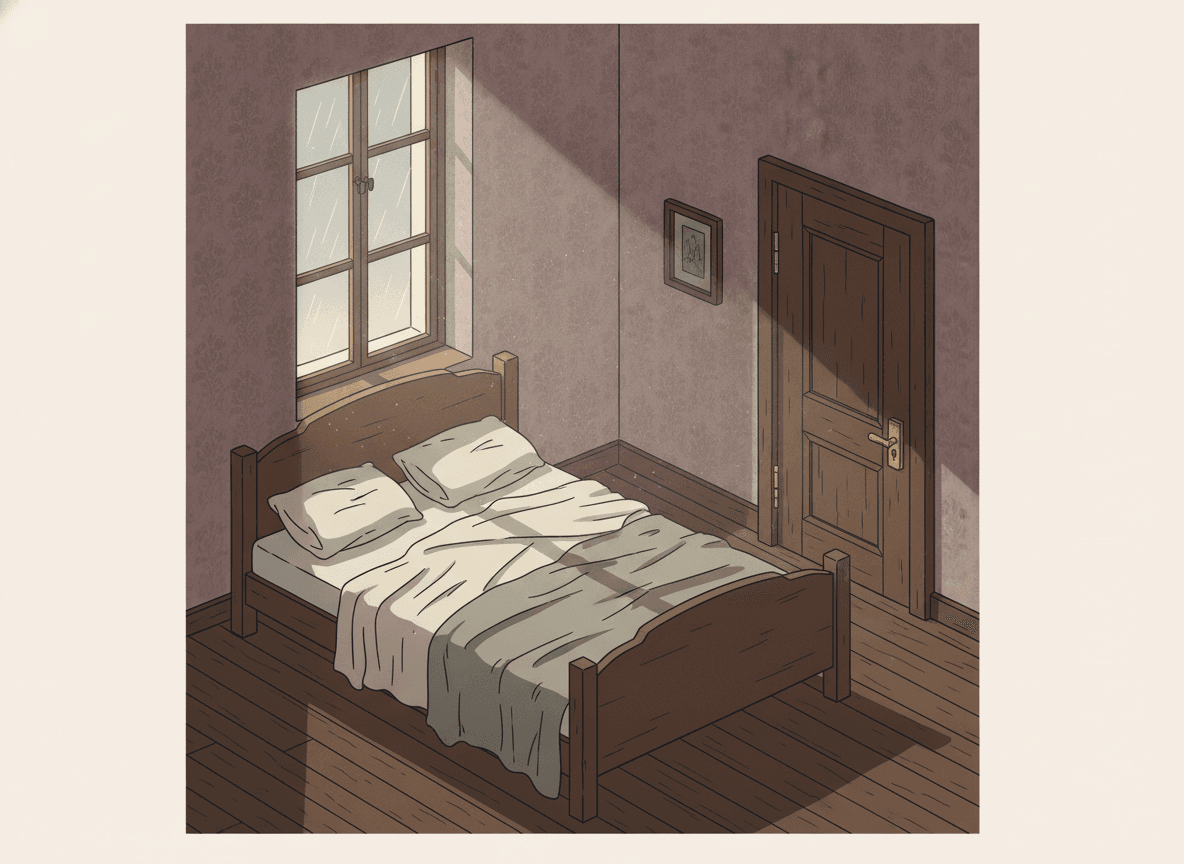
Publication took nearly three years. The story appeared in the magazine Die weißen Blätter in October 1915, then as a book from Kurt Wolff in Leipzig. Kafka was anxious about the cover, and asked the publisher that the creature never be drawn. He wanted the thing left unseen, because the horror lives in the reader's imagination. The illustrator drew a man in a doorway instead. The story sold modestly and was noticed by a small literary circle rather than the wider public.
Kafka died of tuberculosis in 1924, at forty. He had asked his friend Max Brod to burn his unpublished papers. Brod refused and published them, which is why we have The Trial and The Castle at all. The Metamorphosis was one of the few works Kafka himself saw printed, so it became the doorway most readers use to reach him.
Its afterlife is enormous. The word "Kafkaesque" entered ordinary speech for situations that are absurd, faceless and inescapable. The story has been translated into dozens of languages, argued over by critics who read it as comedy, as family drama, as a study of illness and uselessness. Nabokov taught it line by line, insisting readers get the entomology right.
Continue in the app
Open the app for the illustrated story of this book, the world it was written in, and the full text, a free public-domain edition, to read on screen or hear read aloud.
- ✓ The illustrated story of the book
- ✓ The world it was written in, on the map and timeline
- ✓ The full text, free, read or read aloud
Illustrations are created with AI assistance. Summaries are written with AI and reviewed by the editor. Book metadata comes from Wikidata and Open Library.