
Books ›
1890 · London
The Picture of Dorian Gray
Oscar Wilde's shimmering, sinister fable of beauty, pleasure, and the portrait that pays the bill
How this book came to be
In the summer of 1889, Oscar Wilde was a married father of two living in Chelsea, London, better known as a talker, critic and social ornament than as a novelist. That August he had dinner with J. M. Stoddart, an American editor of Lippincott's Monthly Magazine, who was hunting for fiction from London writers. Stoddart commissioned work from Wilde and from Arthur Conan Doyle at the same table. Doyle produced a Sherlock Holmes story. Wilde produced The Picture of Dorian Gray.
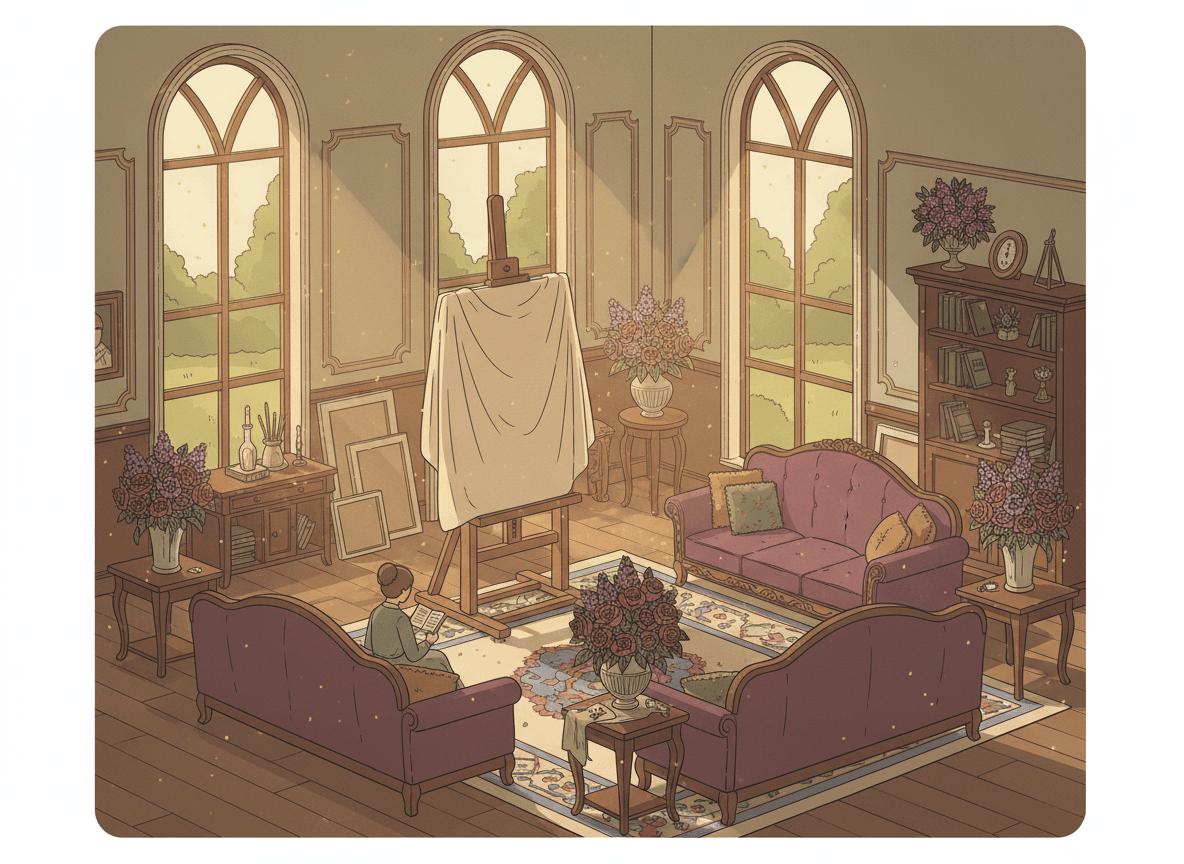
The book is a short novel about a beautiful young man whose painted portrait ages and corrupts while he does not. Wilde had been circling the idea for a while. He later said the germ came from sitting for a painter and thinking how sad it was that the picture would stay young while the sitter aged.
It appeared in the July 1890 issue of Lippincott's, on sale that June, and the reaction was fierce. British reviewers called it poisonous and unclean, and some newsagents pulled the issue from sale, because the story's hints of desire between men were read as an offence against public decency. Wilde fought back in the press with a run of sharp letters defending the artist's freedom. Then he did something cannier. For the 1891 book edition he added six chapters, softened the most exposed passages, and bolted on a preface of epigrams that begins by insisting art has no moral purpose. That preface became one of the founding statements of the Aesthetic movement.
The defence did not hold for long. In 1895, during Wilde's libel trial against the Marquess of Queensberry, the prosecution read passages of the novel aloud in court as evidence of his character. Wilde lost, was tried again, and was sentenced to two years of hard labour. He died in Paris in 1900, poor and largely abandoned.
The novel outlived every attempt to bury it. It has been filmed many times, borrowed by comics and pop songs, and its central image is now shorthand anyone can use: the hidden portrait taking the damage. In 2011 Harvard University Press published the uncensored typescript Wilde first sent to Stoddart, so readers can finally see what an editor cut before anyone else read a word.
Continue in the app
Open the app for the illustrated story of this book, the world it was written in, and the full text, a free public-domain edition, to read on screen or hear read aloud.
- ✓ The illustrated story of the book
- ✓ The world it was written in, on the map and timeline
- ✓ The full text, free, read or read aloud
Illustrations are created with AI assistance. Summaries are written with AI and reviewed by the editor. Book metadata comes from Wikidata and Open Library.